The Whale of Shiba Inu

When a single wallet buys 10% of a token's circulating supply for less than the cost of a used car, the story usually ends one of two ways. The holder exits. Or the position becomes part of crypto folklore. The Shiba Inu whale cluster chose the second path, and Bubblemaps has been tracking it from the start.
The original trade
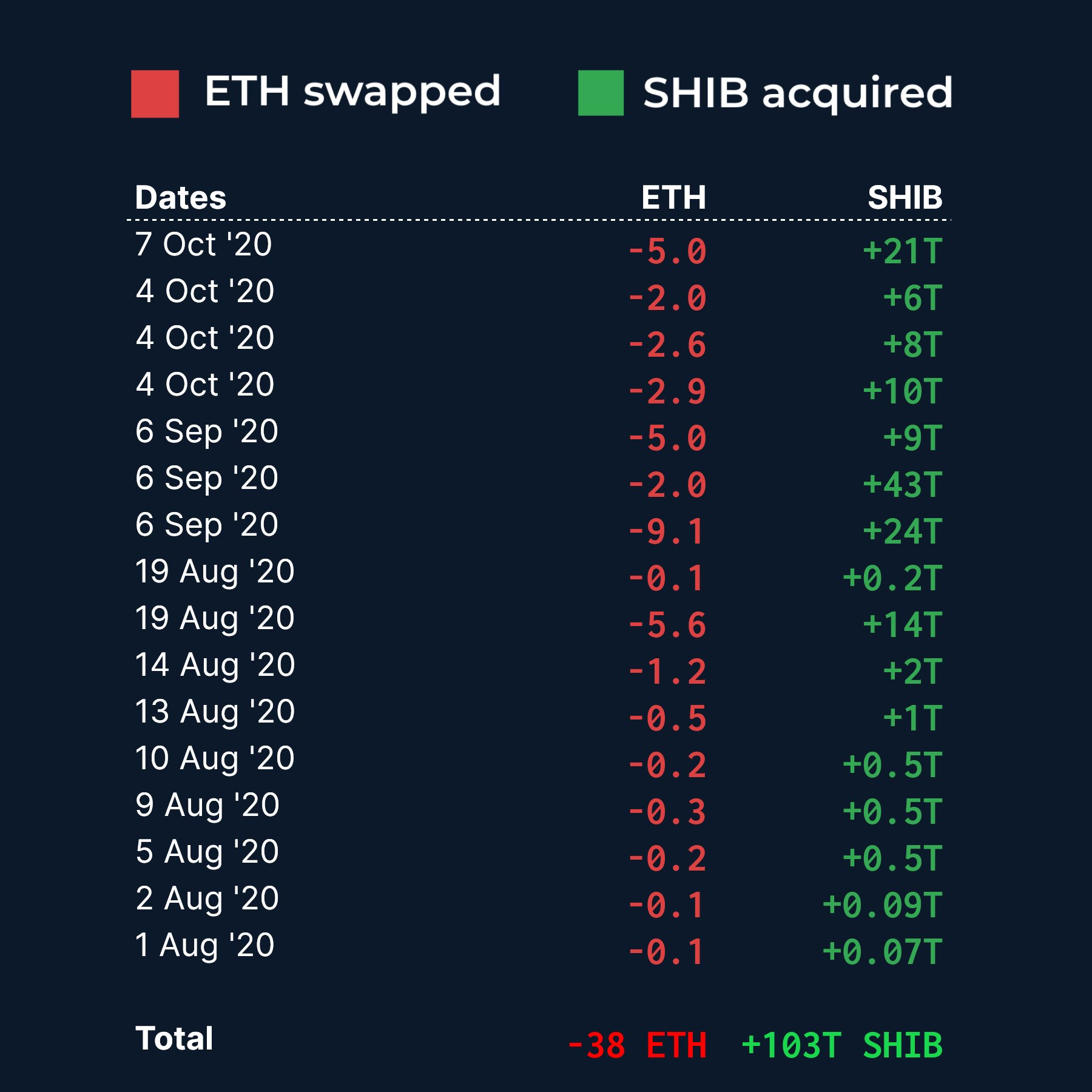
In the second half of 2020, wallet 0x1406 quietly accumulated 103 trillion $SHIB for 38 ETH, roughly $10,000 at the time. Five years later, that same position has been worth as much as $5 billion in a single wallet, and is currently valued above $2.5 billion across the cluster's full footprint. The return on the original bet now sits somewhere north of 21,000x, putting it in the running for the largest single trade in crypto history.
2021: Dodging the radar
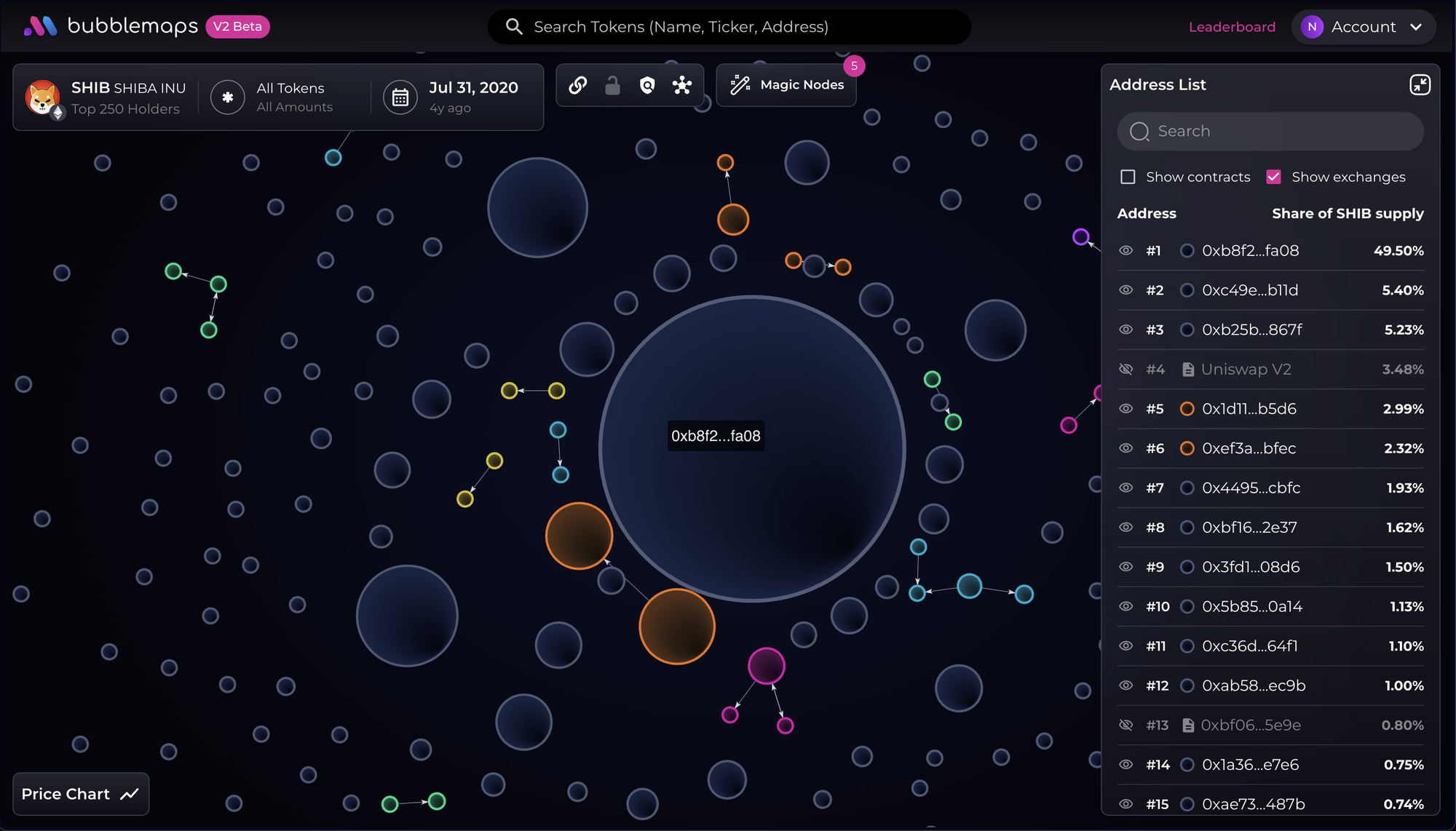
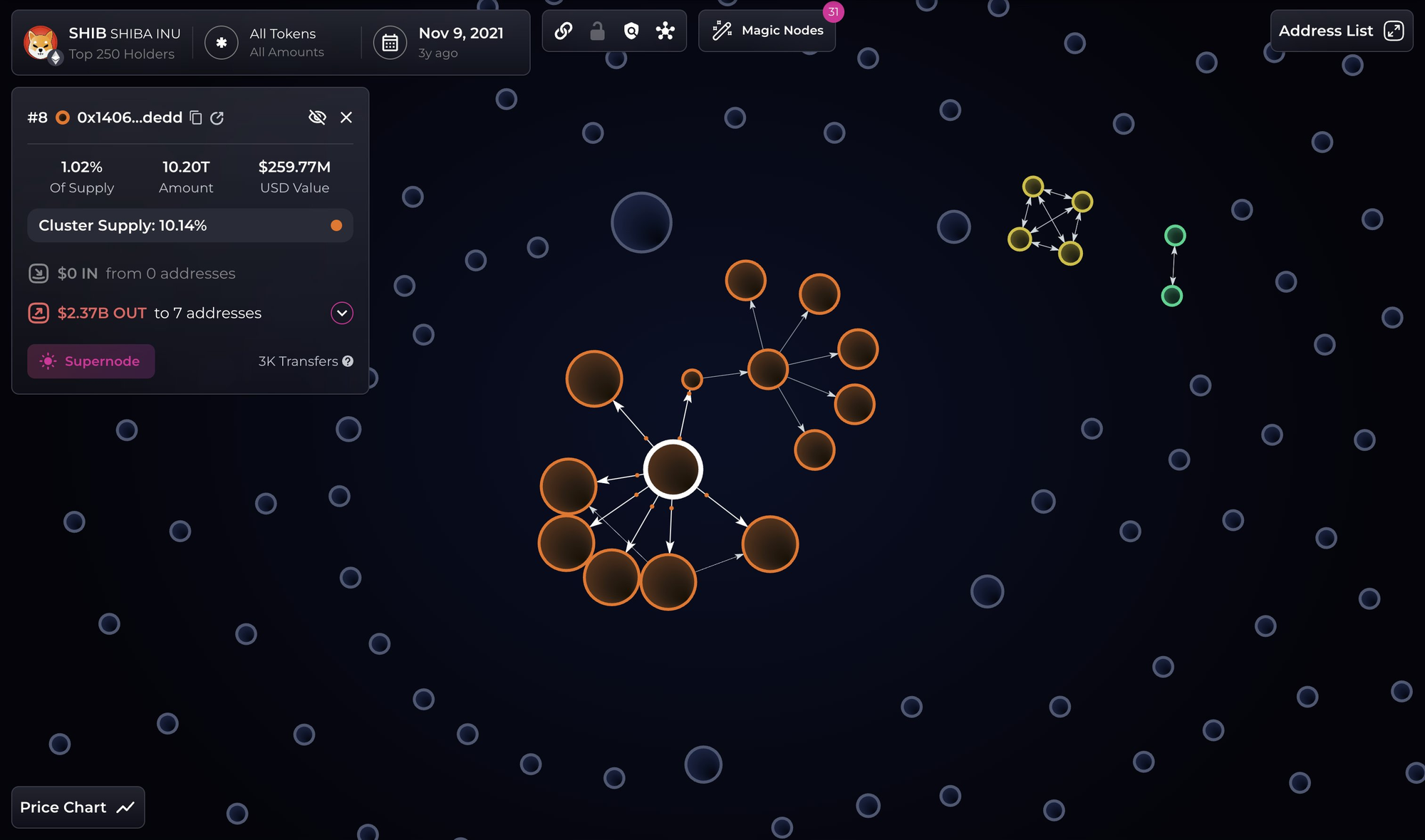
To stay safe (and likely under the radar) he split it into 14 addresses in November 2021.
January 2023: Bubblemaps puts the cluster on the map
Our first thread on the $SHIB whale dropped on January 20, 2023. At the time, the cluster controlled 10% of the supply and was worth just over $1 billion. The thread laid out the funding path from the deployer wallet through 0x1406 and asked the obvious question. What does it mean when one entity holds this much of a token?
The reception was louder than expected. Replies poured in pointing at "@Shibtoshi_SG" as the likely owner, and a SquidGrow-aligned community rallied around the holder as a "diamond hands" archetype. One person even claimed ownership of the wallets and asked us to take the thread down. They offered no proof, so we kept it up.
September 2023: cluster tries to disappear
By September 28, 2023, the wallet structure had changed. The cluster had begun fragmenting its holdings across newly created addresses, a textbook obfuscation move when a large holder realizes they are being watched. We mapped the new layout and showed how the cluster's footprint shifted from a handful of obvious wallets to a wider, harder to read web. The pattern was unmistakable: smaller balances, more addresses, less signal in the top-holder list. Only Magic Nodes, our tool for surfacing hidden links between wallets, made the cluster visible as a single entity.
March 2024: $2 billion and counting
When $SHIB rallied 250% in a single week at the start of 2024, the cluster's value jumped back above $2 billion. By that point, the holdings had spread from a handful of wallets to over 170 addresses. We documented the new structure and called attention to the fact that, despite all the splitting, the cluster had not meaningfully sold.
November 2024: the $2.5 billion snapshot
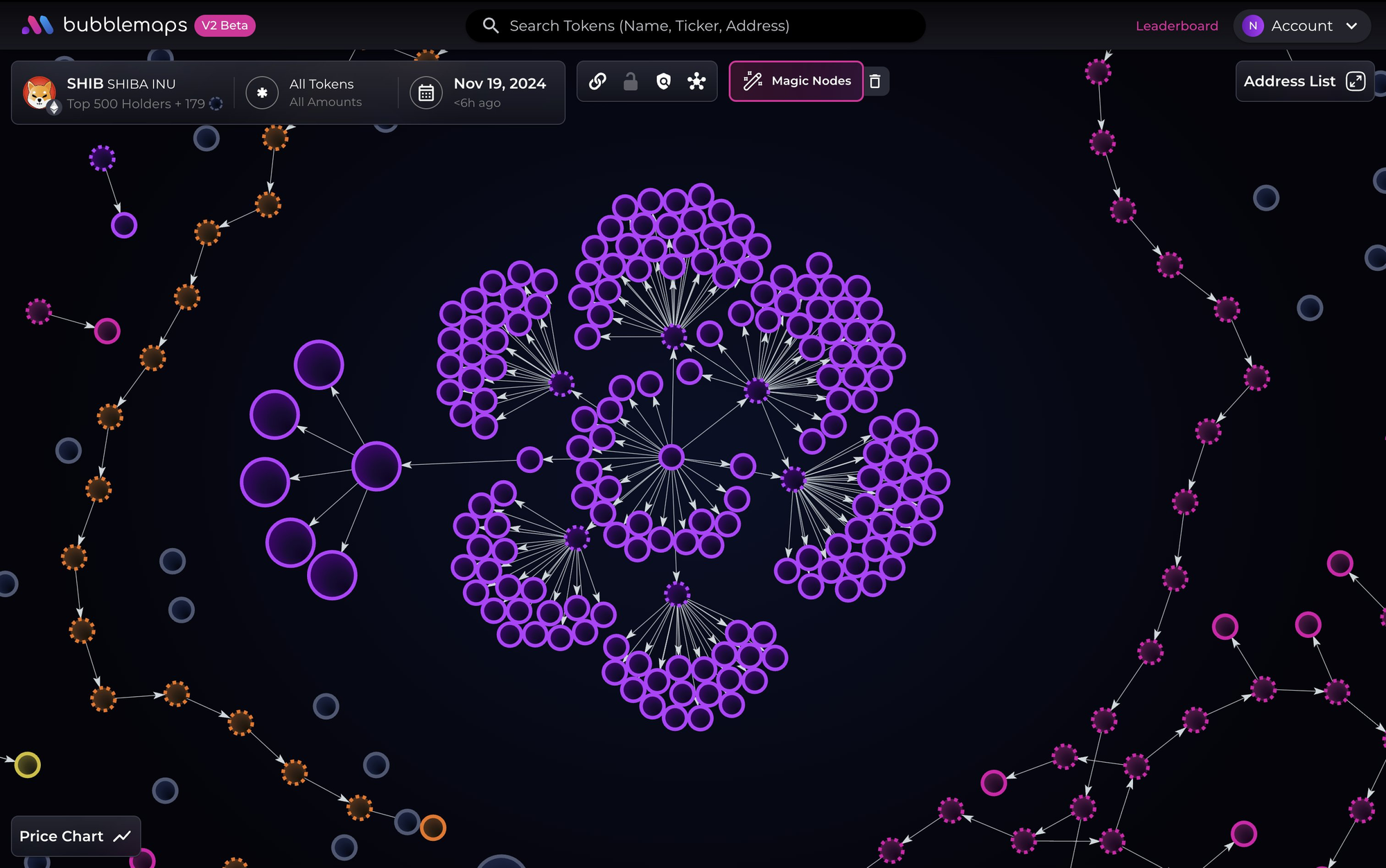
Our final deep dive, on November 19, 2024, confirmed what the on-chain data had been suggesting for nearly two years. The cluster was still holding the vast majority of its original $10,000 investment. Holdings had migrated from 0x1406 to a network of around 150 addresses, Magic Nodes made the underlying concentration visible yet again. The thread also resurfaced a striking detail from the original post. At peak, a single address in this cluster held roughly $5 billion worth of $SHIB before the split.
Where the cluster stands today
The cluster in question is currently holding 8.51% of $SHIB at the time of writing, down from the 10% we first documented but still enormous by any measure. The slight reduction reflects routine on-chain movement rather than a coordinated exit. Across more than four years of observation, the holder has not sold a meaningful slice of the original 103 trillion $SHIB position.
Why this case still matters
The $SHIB whale cluster is one of the cleanest real-world examples of why on-chain transparency tools exist. A single entity quietly accumulated a controlling share of a top-20 token, tried to obscure the holdings once the structure was exposed, and has now spent more than four years holding the bag. None of that was visible from price charts or token-unlock calendars. It was only visible because every transfer left a public fingerprint.
For Bubblemaps, this is a benchmark case. It stretches across the full lifecycle of our coverage: discovery, identification, obfuscation, persistence. If you want to explore the current state of the cluster yourself, the interactive maps linked in the threads above are the best starting point.