How to Spot a Rug Pull Using Bubblemaps (Before It Happens)
You found a token. The chart looks clean, the Telegram is buzzing, and the dev is promising a CEX listing next week. But something feels off.

Before you ape in, open Bubblemaps. It might just save your portfolio.
Rug pulls don't happen by accident. They leave traces: on-chain, visible, and often hiding in plain sight. Bubblemaps is built to surface exactly those traces: coordinated wallet clusters, concentrated insider holdings, and the quiet buildup before a coordinated dump. This guide shows you how to read those signals and act on them before the exit liquidity is you.
What Is a Rug Pull, Really?
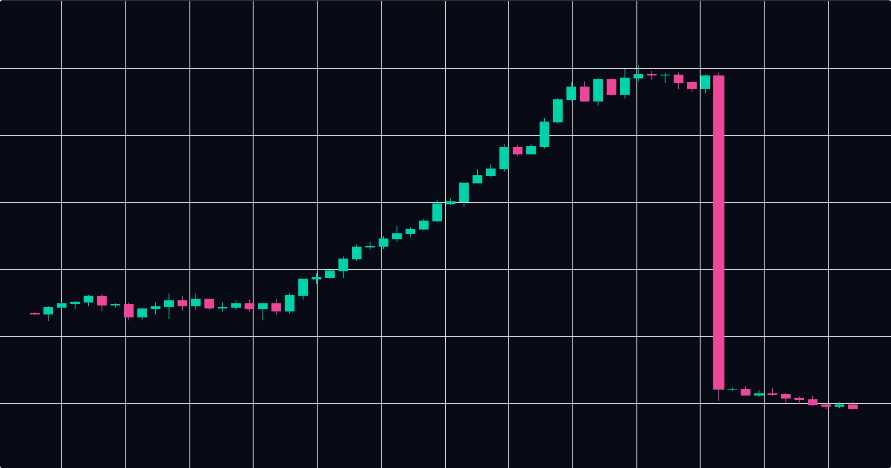
A rug pull is when insiders (developers, early investors, or coordinated wallets) dump their token holdings on retail buyers, collapsing the price and leaving latecomers with near-worthless bags.
There are two main types:
- Hard rug: Liquidity is withdrawn instantly. The pool drains, the chart goes to zero, and the team vanishes. Often executed via smart contract backdoors.
- Soft rug: A slower bleed. Insiders sell steadily over days or weeks, gradually suppressing price while the project maintains a public-facing presence. Much harder to detect without on-chain tools.
Both leave footprints. Bubblemaps lets you read them.
Why Bubblemaps Is the Right Tool for This
Most analytics tools show you what happened after the fact. Bubblemaps shows you who holds what, and how they're connected in real time, before anything happens.
Its core feature is wallet cluster detection: it visualizes which wallets are likely controlled by the same entity, based on on-chain transaction patterns. Wallets that funded each other, transacted in suspicious synchrony, or share behavioral fingerprints are grouped into clusters and displayed as interconnected bubbles.
This turns a list of anonymous addresses into a map of influence, making coordinated insider holdings immediately visible.
Step 1: Check the Token Distribution Map
The first thing to do when you open a token on Bubblemaps is look at the distribution of supply.
A healthy token looks like a scatter. You'll see many mid-sized bubbles representing diverse holders: CEX wallets, liquidity pools, individual retail buyers, with no single cluster dominating the map.
A dangerous token looks like a solar system. One massive cluster sits at the center, surrounded by smaller wallets that all trace back to it. Sometimes it's obvious. Sometimes the cluster is split across dozens of seemingly unrelated wallets, but Bubblemaps connects the dots.
Red flags to watch for:
- A single cluster controlling more than 20–30% of supply
- Multiple mid-sized wallets that all funded from the same source wallet
- A "decentralized" top holder list where 10 of the top 20 wallets are connected to each other
- Wallets labeled as "team" or "dev" holding far more than disclosed
If the top 10 wallets are all the same color on the map, meaning Bubblemaps has grouped them as likely controlled by the same entity, treat that as a serious warning sign.
Step 2: Identify Insider Wallet Clusters
Insider wallets don't always buy at launch. Some are pre-funded. Some receive tokens from the deployer wallet before the public sale. Some snipe the token within the first few blocks.
Bubblemaps makes these patterns visible through cluster detection, which groups wallets by funding origin and behavioral similarity.
Look for:
- Deployer-connected wallets: Wallets that received tokens or ETH/SOL directly from the contract deployer. These are insiders by definition.
- Bundle wallets: A set of wallets that all bought in the same block or within seconds of launch, often funded from the same source. This is known as "bundling," a coordinated snipe that accumulates large supply before anyone else can react.
- Interconnected top holders: Open the top 10–20 holders. If multiple wallets are linked by colored lines in the bubble map, they're flagged as related. Even if each wallet holds only 2–3%, five connected wallets = 10–15% in insider hands.
Checking bundles is a function (available in Bubblemaps) is specifically designed to detect launch-time coordinated buys. Run it on any new token. If a significant percentage of early supply was bundled by a small group of wallets, the project is either a rug or heavily insider-controlled, which amounts to the same risk.
Step 3: Look for Abnormal Wallet Connections
On a legitimate project, the token distribution reflects natural market behavior: some early buyers, some larger funds, some CEX wallets, and a long tail of retail. The connections between wallets are sparse and organic.
On a suspicious project, the connection graph looks different. You'll see:
- Star patterns: One central wallet connected to many smaller ones, suggesting a single operator managing multiple addresses
- Chain funding: Wallet A funded Wallet B, which funded Wallet C, which now holds 4% of supply. A deliberate obfuscation trail.
- Mirrored behavior: Multiple wallets buying and selling at exactly the same time, suggesting automated operation by a single actor
When you see these patterns, you're likely looking at a single entity that has split its holdings across wallets to disguise concentration. The intent is almost always to avoid triggering alerts, and eventually to dump.
Step 4: Track Whale Wallet Movements
Rug pulls don't always happen in a single transaction. Soft rugs in particular involve gradual selling, small enough to avoid panic but large enough to slowly drain the price.
Bubblemaps' whale wallet tracker lets you monitor the largest holders over time. Use it to watch for:
- Gradual position reduction: A top holder who held 5% six weeks ago and now holds 1.5% has been selling. That's not necessarily a rug, but combined with other signals, it matters.
- Wallet-to-wallet transfers before selling: Insiders sometimes shuffle tokens between their own wallets before selling, likely to obscure the origin. If a cluster of connected wallets is redistributing internally, watch the exits closely.
- Sudden wallet inactivity followed by a large transfer: A wallet that sat dormant for weeks suddenly moves its entire balance to a new address, often a precursor to an exchange deposit and a dump.
The historical token holders map is especially useful here. You can scroll back in time and see what the distribution looked like at launch versus today. A token that started concentrated and became more concentrated over time is a project where insiders are accumulating, not distributing.
Step 5: Use the Token Supply Audit
Before investing in any token, run a quick supply audit using Bubblemaps. This gives you a clear picture of:
- What percentage of supply is in insider-connected wallets
- Whether liquidity provider wallets hold a suspicious share
- Whether the deployer wallet still holds tokens (and how many)
- Whether any wallets are linked to known scam addresses
Pay particular attention to the deployer wallet. If it's been emptied into anonymous wallets that are now sitting on large positions, that's a classic pre-dump setup. The deployer distributes supply to a network of addresses, waits for price to rise on retail FOMO, then coordinates a simultaneous dump.
Bubblemaps visualizes the deployer-to-cluster flow in a way that raw blockchain explorers simply can't. What would take hours of manual tracing on Etherscan takes thirty seconds on Bubblemaps.
Step 6: Cross-Reference with the Historical Map
The historical token holders map is one of Bubblemaps' most underused features for rug detection. It lets you see how the distribution has changed over time, which tells you a story.
Ask yourself:
- Did a large cluster sell just before a price drop? That's insider selling on information.
- Did new large wallets appear right before a positive announcement? That's front-running.
- Did the top holders change dramatically overnight? That's either a coordinated exit or a wallet shuffle before a dump.
Pattern recognition across time is what separates a legitimate project from a slow rug. A healthy token sees gradual diversification: early holders taking profits, new wallets entering. A rug sees the opposite: concentration increasing, or a steady bleed from a few large wallets that never seems to stop.
Real Warning Signs: A Quick-Reference Checklist
Use this before investing in any new token:
Distribution
- No single cluster controls more than 20% of supply
- Top 20 wallets show few or no connections to each other
- Deployer wallet has been emptied into clearly non-insider addresses (CEX, LP, etc.)
Insider detection
- No bundle activity detected at launch
- No wallets connected to the deployer are still holding large positions
- Top holders match the team's stated allocation (if public)
Behavioral signals
- No unusual wallet-to-wallet transfers in recent days
- Large wallets have not been gradually reducing positions
- No dormant wallets have recently reactivated
Historical check
- Distribution is more diversified now than at launch
- No suspicious selling correlated with price drops or announcements
- No known scam-linked addresses appear in the top holders
If you're checking boxes on multiple items in the red column, walk away. The opportunity cost of missing a 5x is far lower than the loss of a full rug.
Bubblemaps Across Different Chains
Rug pulls aren't chain-specific. They happen on Solana, Ethereum, BNB Chain, Base, and Tron, and Bubblemaps covers all of them.
A few chain-specific notes:
- Solana: Rug pulls move fast here due to low fees and high-frequency trading bots. Using Bubblemaps to check for bundles is especially critical on Solana meme coins, where launch-block sniping is endemic.
- Ethereum: Soft rugs are more common due to higher gas costs. Look for gradual selling over weeks rather than a single dump event.
- BNB Chain: A historically high-risk chain for rug pulls. Deployer-connected wallets are often more elaborate here, with multiple hops designed to obscure origin.
- Base: A newer chain with fast-growing meme coin activity. Supply concentration tends to be high on early-stage Base tokens, use the distribution map carefully.
The interface is consistent across chains, once you know how to read a Bubblemaps visualization on Ethereum, you can apply the same logic everywhere.
What Bubblemaps Can't Tell You
No tool is perfect. Bubblemaps gives you on-chain data — but rug pulls can also involve:
- Smart contract backdoors: Mint functions, transfer restrictions, or hidden admin keys that allow the deployer to drain or freeze funds. Bubblemaps won't show you this. Use a contract auditing tool like Token Sniffer or GoPlus alongside it.
- Off-chain coordination: Fake influencer partnerships, paid shill campaigns, or coordinated social media manipulation. This is invisible to any on-chain tool.
- Locked liquidity that unlocks: A token can show healthy on-chain distribution but have liquidity locked for only 30 days. Always verify the liquidity lock independently.
Think of Bubblemaps as one layer of your DYOR stack, a crucial one, but not the only one.
The Bottom Line
Rug pulls succeed because retail buyers trust surface signals: a nice website, an active community, a rising chart. Insiders count on you not looking deeper.
Bubblemaps removes that advantage. It takes the most important signal (who actually controls this token) and makes it visible in seconds. Clustered wallets, bundled launches, whale sell-offs, deployer-connected holders: all of it is there if you know where to look.
The thirty seconds it takes to open a token on Bubblemaps before investing is the cheapest insurance in crypto.
Want to go deeper? Read our guides on How to Analyze Meme Coin Holders with Bubblemaps and How to Use Bubblemaps: A Step-by-Step Tutorial for Beginners.